
For quite some time now, some of our TikTok and Instagram “For You” pages have been dominated by a trend known as traditional wives, or tradwives. The term tradwife refers to conservative, submissive, hard-working homemakers who bake, cook, and take care of the children. Meanwhile, the husband, of course, is the breadwinner.
What are Tradwives?
Traditional wives strongly resemble the “ideal” housewife of the 1950s. Since the trend originally emerged in the United States, its aesthetics and the values of that era are based on the American model.
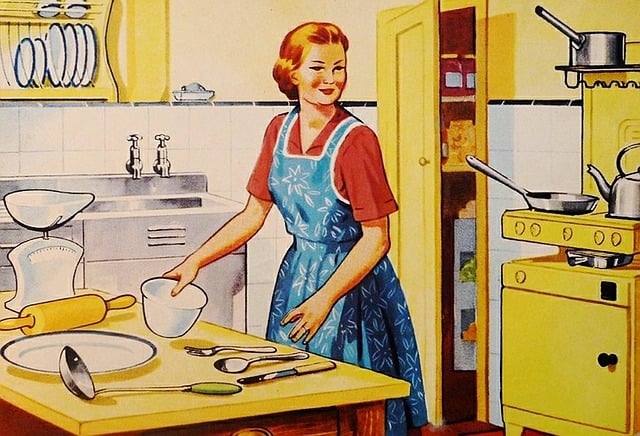
The typical Tradwife is standing in the kitchen, wearing pretty dresses and surrounded by pleasant colors. She bakes or cooks comforting meals for her family and represents a form of femininity that is often no longer considered current.
Tradwives serve their husbands and children, take care of them, and seemingly live on the husband’s income: the provider’s income.
As always in the contexts influencers and videos, color schemes, lighting, and aesthetics play an important role, as the main goal of these videos is to be appealing and, as a result, reach as many people as possible.
Because Tradwives are really businesswomen!
They earn substantial amounts of money from their videos and can therefore support their families, which is completely contrary to the illusion they are trying to portray.
The videos present an outdated ideal of womanhood as if viewed through a pink filter. This is not to say that this way of life would be wrong. What is important to emphasize is that it is not the only option.
When does a trend become a cause for concern?
To better understand the popularity of this trend, it is worth taking a look at women’s everyday lives.
As more and more women have entered the workforce, they are increasingly facing a double – or even triple or quadruple – burden. Women are expected to juggle family and work, hobbies, friends, exercise, beauty, and much more, which can quickly become overwhelming and have negative effects on both mental and physical health. In order to escape this burden as well as social and personal pressure, social media present women with the possibility of deliberately focusing on family and home.
An option which is portrayed as feminist and as the “right” choice.
The fact that this trend became popular in 2020 was probably also related to the pandemic, which pushed many women out of the workforce. Later, the trend also found an audience in Europe, and European influencers began jumping on the Tradwife bandwagon.
What does this trend promise?
Conservative, seemingly straightforward gender roles and responsibilities promise one thing above all: security.
Due to the current political and social conflicts and crises, more and more people long for a simpler past. Yet the past people are longing for (the 1950s) was anything but simple: the postwar period, hunger, oppression, coercion…
Women fought for years for their rights: for equality, access to employment, and, above all, for a diversity of roles and ways of life.
Many Tradwives also promote a clearly hierarchical, binary, and often right-wing view of gender. This creates the impression that everything else, anything that deviates from this model, is rejected and considered “wrong.”
The Illusion of Tradwives
What lies behind this perfect facade?
1. There is an unequal power dynamic between women and their partners.
2. This inequality can lead to a feeling of isolation in such relationships. Employment provides more than just financial independence. It is also an important factor in maintaining mental health, as paid work provides structure, social connections and a sense of fulfillment along with financial security in old age. It also contributes to the development of one’s identity.
3. There are also discussions about how women in this type of relationship through their dependence may find it more difficult to escape abusive relationships because they lack the necessary financial and social resources. A separation or the loss of a partner and his ability to earn an income can entail significant difficulties.
4. Apart form this, it is very difficult nowadays for a family to live on just one income.
These risks and problems often do not apply to the influencer Tradwives themselves because their reach and product placements make them financially independent.
The women who are exposed to these risks are those who believe in the illusion of Tradwives and therefore imitate their lifestyle. Since young women in particular are targeted by this content, it is essential to inform them about the risks and to encourage them to look behind the facade.
The desire for security is more present than ever due to the current crises. Nevertheless, we should create conditions that make it possible to reconcile family and work. In addition, the diversity of lifestyles and identities should be preserved.
What matters is having a choice!
Translated by Julia Matzinger
#Tradwives #1950s #SocialMedia #GenderRoles #RightWingConservative #Trend #HumanTraffickingVictimProtection #HumanTraffickingPrevention #AgainstHumanTrafficking #EndHumanTrafficking #EndExploitation #EndTrafficking #HopeForTheFuture #Austria