
One click, one package, one bargain – never before has consumption been as easy as it is today. Yet behind seemingly low prices lies an uncomfortable truth. Our consumption habits contribute to the exploitation of people and the environment. While we in the Global North benefit from low prices, others pay the real price, often with their health, their dignity, or even their lives.
Cheap is never really Cheap
A €5 T-shirt or €10 pair of shoes may seem like a good deal. But such prices do not reflect the true costs; rather, they are the result of systematically shifting costs along global supply chains. Companies reduce production costs by employing workers in low-wage countries and circumventing environmental regulations. In the textile industry, for example, garment workers often work under extremely difficult conditions. Long working hours, low wages, and inadequate workplace protections are widespread. These conditions are not accidental but are part of a system designed to achieve maximum cost efficiency. At the same time, environmental damage, such as pollution or CO2 emissions from transportation, is not factored into the price. This means that cheap products are only cheap because the actual costs are passed on to others – to workers and to the environment.
Consumption and social inequality: A blind spot
Sustainable consumption is often presented as an individual responsibility. But this perspective falls short. Studies by the Vienna Chamber of Labour show that consumption habits are strongly influenced by social factors such as income, education, and time. People with lower incomes are more likely to choose cheaper products because they simply cannot afford more expensive sustainable alternatives. At the same time, people often lack the time or access to information needed to make informed purchasing decisions. Sustainable consumption is also negatively affected by structural barriers such as a lack of transparency, greenwashing, and complex supply chains. Sustainable consumption is therefore unequally distributed and reinforces existing social inequalities. This reality leads to a problematic shift in moral responsibility. Individuals are held accountable for their consumption habits even though their room to manoeuvre is severely limited.
Fast Fashion: Here, there is a choice
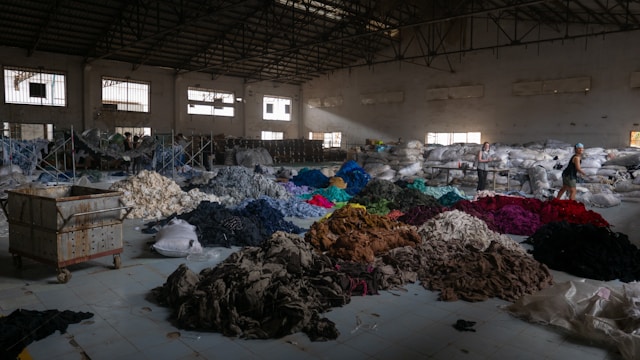
While consumer choices are often constrained by income, time, and access, fast fashion presents a somewhat different picture. Although many people choose inexpensive clothing for financial reasons, the fast-fashion business model deliberately targets rapid, frequent purchases and the constant turnover of trends.This is where a crucial distinction lies. No one depends on buying new clothes every week. Fast fashion intensifies exploitation through low wages, poor working conditions, and significant environmental impacts, driven by a throwaway mentality that is artificially created.
Even though sustainable fashion is often more expensive, fast fashion offers greater opportunities to reduce consumption, wear clothes for longer, or use second-hand alternatives. This makes it clear that while structural constraints shape many consumption decisions, the fashion sector offers greater individual scope for action to at least partially counteract exploitation.
Globalised responsibility, localised consequences
A key characteristic of our consumption is the geographical separation between production and consumption. Products are often manufactured under conditions that remain invisible to consumers. This disconnect allows companies to externalise negative consequences such as environmental destruction and poor working conditions to other regions. While consumers in the Global North benefit, people in the Global South bear the main burden of production. In this way, consumption reinforces global inequalities and helps sustain a system based on exploitation.
Systemic solutions to a systemic problem
Effectively combating exploitation requires structural change. This includes binding supply-chain laws that require companies to comply with social and environmental standards. Prices must also reflect the true costs of products. When environmental and social costs are incorporated into prices, cheap products lose their apparent advantage. Access to sustainable consumption must also be improved, for example through political measures that make sustainable products more affordable and make relevant information easier to access.
Conclusion
Our consumption is part of a global system that either reinforces exploitation or creates opportunities for change. But individual choices alone are not enough to transform this system. What is needed instead are political measures, economic reforms, and a shift in societal attitudes. Only when fair conditions become the norm can sustainable consumption be made possible for everyone. Anyone who wants real change must therefore not only question their own behaviour but also advocate for political and economic reforms.
Translated by Anna Hoschka
#Konsumverhalten #Ausbeutung #FastFashion #nachhaltigerKonsum #sozialeUngleichheit #Billigprodukte #Arbeitsbedingungen #Nachhaltigkeit #Greenwashing #OpferschutzMenschenhandel #PräventionMenschenhandel #AgainstHumanTrafficking #GegenMenschenhandel #EndExploitation #EndTrafficking #HopeForTheFuture #Österreich