
What is really going on in prostitution? This question cannot be answered solely through statistics, newspaper reports, conferences, or books. Behind the term “prostitution” are real people with their own personal stories, experiences, struggles, and forms of dependency, people who have often also been victims of violence. Many of these stories remain hidden and are rarely told or heard publicly.
As an organization committed to combating human trafficking and forced prostitution, we want to look closely at the realities others look away from. Through our articles, social media formats, and other informational resources, we seek to raise awareness about human trafficking, sexual exploitation, and forced prostitution, while giving those affected a platform to make their experiences visible, as behind every statistic there is a human being with their own story, their own wounds, and a right to protection and dignity. Stories such as that of former Hells Angels member and pimp Kassra Zargaran provide an opportunity to talk and write about these issues.

In an interview with the Tages-Anzeiger (a Swiss newspaper based in Zurich with a nationwide readership), Kassra Zargaran spoke after serving his prison sentence about his experiences in the red-light district and about the structures surrounding prostitution as he experienced them. Particularly striking is the fact that he himself now calls for a ban on prostitution.
A Former Pimp Speaks About the Prostitution Scene
Kassra Zargaran describes a world shaped by power, dependency, and violence. At the heart of his account is the question of consent and free choice.
He explains that during his time in the scene, he did not meet a single woman who, in his view, was working as a prostitute of her own free will. This is not only about direct coercion or physical violence. Financial hardship, various forms of dependency, threats, psychological pressure, or control by other people can severely restrict or completely undermine a person’s ability to make a free choice.
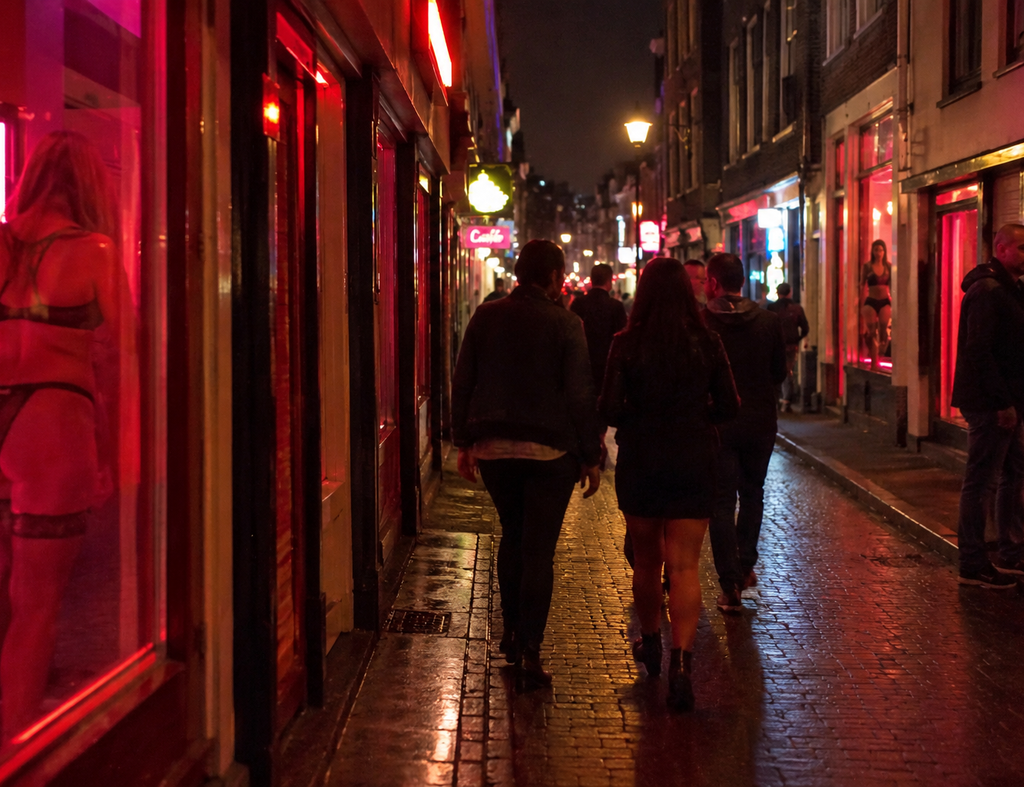
The question of free choice is particularly important, and it needs to be examined from different perspectives. A situation may appear from the outside to be the result of a voluntary decision while still being shaped by significant forms of dependency. It is therefore not enough to ask whether a person could theoretically say “no;” it is necessary to examine the circumstances under which the decision had to be made.
Zargaran speaks clearly about male-dominated structures. Based on his experience, the women involved have little or no control over the conditions under which they work.
Of course, these statements cannot be taken as representative of every person in prostitution. They do, however, clearly show someone who knew the scene intimately and spent many years within it perceives it. Important questions include: Who controls the money? Who determines the working conditions? Who profits? And what real opportunities do those affected have to leave their situation?
Between Free Choice and Exploitation
The debate about prostitution is often reduced to the question of whether it is a voluntary or involuntary activity. Reality, however, is more complex.
Human trafficking and sexual exploitation are serious human rights violations. At the same time, not every person working in prostitution should automatically be considered a victim. A human-rights-based perspective must allow for both: It must take individual autonomy seriously while protecting those who are exploited, threatened, or forced into prostitution. Neither side should be trivialized or misrepresented. Nor should the debate become an excuse for denying help to people in vulnerable situations.
This is one of the major challenges in the political debate: How can a system prevent economic hardship, social exclusion, dependency, or a lack of alternatives from being exploited by others?
Zargaran on the Role of the State
Zargaran is particularly critical of the role of the authorities. Based on his experiences in Hamburg’s red-light district, he firmly believes that authorities tolerated or ignored certain developments for far too long as prostitution is legally permitted.
While this assessment must be regarded as his personal perspective, it also raises an important question regarding human rights: How can the state protect people from exploitation when exploitation takes place within a legal or partially regulated industry?
The mere existence of legal regulations does not guarantee effective protection. What matters is effective oversight, access to support services, effective prosecution of human trafficking and pimping, and low-threshold access to assistance for those affected without fear of punishment, deportation, or further retaliation.
Why We Are Writing About This Interview
The interview with Kassra Zargaran is noteworthy in part because it gives a voice to someone who is not looking at the scene from the outside but was himself once part of it. His statements cannot and should not explain everyone’s experience. However, they offer insight into power structures that often go unexamined in public debate.
One particularly significant aspect is the change in his own perspective
As a former pimp, Kassra Zargaran now calls for a ban on prostitution. Ultimately, this raises a question of responsibility: What does it mean when someone who once benefited from certain structures comes to the conclusion that those very structures are dehumanizing?
For an organization such as Hope for the Future, this question is at the heart of our work. People must never become commodities. No one should be sexually exploited because of poverty, dependency, deception, violence, or threats. And wherever human trafficking occurs, decisive action is needed.
Listen, Look Closely, Take Action
Kassra Zargaran’s story does not provide a simple answer to the question of how prostitution should be viewed in general. Rather, it is an opportunity to take a closer look.
We should listen closely to people who have experienced exploitation and pay attention to the perspectives of those who speak about its consequences. At the same time, we must combat the structures that enable human trafficking, coercion, and sexual exploitation.
Because the crucial question is not simply: Is prostitution legal or illegal?
The crucial question is: How do we ensure that human rights, dignity, autonomy, and protection from exploitation are genuinely upheld?
That is exactly what we need to talk about.
Translated by Julia Matzinger
#ProtectingVictimsOfHumanTrafficking #HumanTraffickingPrevention #AgainstHumanTrafficking #EndExploitation #EndTrafficking #HopeForTheFuture #Austria
Image credits: The images were created with the assistance of AI.