
Recent reports from Germany make clear what organisations working against human trafficking and forced prostitution are confronted with: behind seemingly legal employment, private flats and supposedly voluntary prostitution, highly exploitative structures can be concealed.
Human trafficking does not only take place in remote regions or in secret. On the contrary: exploitation, human trafficking and forced prostitution have become embedded within our structures and occur in the heart of European cities – in places where the rule of law, a functioning welfare state and protection by the authorities are generally taken for granted.

In early August 2026, ZEIT, among others, reported on a police operation in Munich. Investigators took action against a suspected human trafficking network. Three men and one woman are alleged to have brought women from Asia to Bavaria and provided them with flats for rent in which they were expected to engage in prostitution. During a large-scale operation, twelve flats were searched. According to reports, a 72-year-old suspect is in pre-trial detention; assets worth several hundred thousand euros were also seized.
It is particularly important to focus on the women themselves. Media reports refer to six women from Vietnam and one woman from China who were reported for, among other things, prohibited prostitution and breaches of residence regulations.
When Supposed Voluntariness Becomes a Trap
A second recent report describes another development that must not go unmentioned. According to Germany’s 2024 Federal Situation Report on migrant smuggling, increasing numbers of Chinese women are being brought to Germany through organised structures in order to work in prostitution. Criminal networks apparently also make use of legal entry routes via visa-free third countries such as Serbia. It was also established that contacts, flats, advertising and organisational procedures are, among other things, coordinated through encrypted chat groups.
At first glance, such a situation may appear voluntary. A woman enters the country, engages in an occupation and works in a private flat. Yet voluntariness alone says nothing about the actual living and working conditions.
The crucial question is: Can the person genuinely make free decisions about her life and her work?
According to the report, women can become subject to considerable dependency on the operators of these structures. Among other things, they take care of advertising, pricing, bookkeeping and the organisation of the premises and, according to the report, sometimes demand up to 50 percent of the income generated by the women through prostitution. At the same time, the absence of work permits can further increase their legal and personal dependency.
This is often where human trafficking begins: not necessarily with visible violence, but with dependency, deception, economic pressure, a lack of alternatives, a lack of control and a lack of attention.
Language Matters
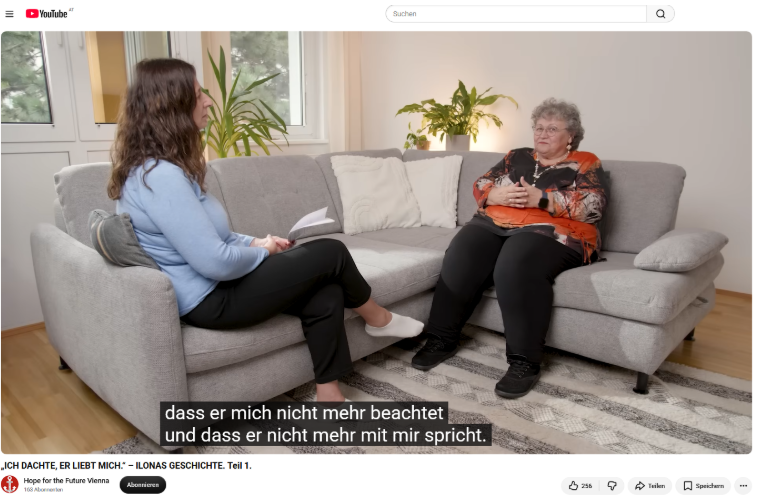
Language is an instrument of power. It is not only a question of which language the person concerned speaks, but also of who speaks about them, from what position they speak and what images are created as a result. This is precisely where Gayatri Chakravorty Spivak’s concept of “Subaltern Speak” comes in: the question is not merely whether marginalised people have a voice, but whether their voice is actually heard, understood and recognised as an independent perspective within existing social and institutional power structures. Labels such as “Chinese prostitutes”, “smuggled women” or “forced prostitutes” turn women into objects of reporting and reduce their complex lived realities to stereotypical categories.
Instead of allowing them to speak for themselves and making their perspectives visible, there is a danger that people will continually speak about the women, while at the same time those individuals, networks and structural conditions that both cause and exploit economic hardship and that keep victims trapped within this system through various forms of dependency and measures disappear from view. A critical approach to power in language must therefore not only question how those affected are spoken about, but also who has the authority to interpret and define their stories. This is precisely what organisations such as Hope for the Future are campaigning for: we want to give those affected a voice themselves and have therefore decided to create our own channel, giving the women concerned the space and opportunity to tell their stories: Link.
The distinction between migrant smuggling and human trafficking is also important. Not every case of migrant smuggling is automatically human trafficking. Human trafficking occurs where people are deliberately recruited, transported and so on – usually through the threat of violence or other forms of coercion. Detailed information can be found in a concise form on the website of the Federal Criminal Police Office. Naturally, there are overlaps in practice.
This is why investigations must not be limited to establishing illegal residence or an illegal activity. They must analyse the entire structure behind it: Who organised the ‘journey’? Who controls the accommodation? Who determines the working conditions? Who collects the money? Who controls the communication channels? And above all: Who profits from the dependency of those affected?
Victim Protection Must Come First
The Munich case also demonstrates how important consistent investigative work is. The deployment of 90 police officers and the search of twelve flats clearly illustrate the scale of such investigations.
However, successful criminal prosecution and the detention of individual people must not be the end of the story.
Victims of human trafficking need safe accommodation, professional counselling, medical and psychological support, interpreting services and secure access to legal assistance. It is also crucial that they are given the opportunity to speak about their experiences without fear of immediate consequences relating to their residence status.
A person who finds themselves in an exploitative situation does not become a witness simply because they have been identified and questioned by the authorities. Trust must first be established, and this requires the police, the justice system, social services, NGOs and specialised counselling centres to work closely together. Only when these systems work together can victims be protected and perpetrators’ structures be effectively and sustainably prosecuted. Unfortunately, practical experience makes it necessary to state clearly that there are serious shortcomings in this area. The reasons for this are varied and interconnected.
A Pan-European Problem
The figures from the German situation report also demonstrate that migrant smuggling is by no means a marginal phenomenon. In 2024, Germany recorded 7.954 cases of migrant smuggling – a slight increase compared with the previous year. According to the report, the number of suspects rose by as much as 6,3 percent, to 7.607 people.
For us, this is a mandate to think beyond national borders.
Human trafficking operates internationally, and therefore the fight against it must also operate internationally. Countries of origin, transit and destination must exchange information and coordinate investigations. At the same time, easily accessible support services are needed for those affected – regardless of whether they entered Europe through a regular or irregular route.
Human Trafficking Is Not a Hidden Problem
The recent cases in Bavaria demonstrate one thing above all: human trafficking is not an abstract problem that takes place somewhere far away. It can develop in completely ordinary flats, in cities and within existing legal structures.
We must therefore not be satisfied when a single network is dismantled. We must understand the structures that enable exploitation.
As an NGO working against human trafficking, we therefore call for a fundamental change of perspective: it should not be a woman’s origin, her residence status or her occupation that is at the centre of attention, but first and foremost the protection of her human dignity!
Because human trafficking does not end with a police raid. It only ends when victims are safe, know their rights, receive support and perpetrators can no longer gain financial benefit from their exploitation.
This is a task for the police and the justice system. It is a task for politicians and the authorities. And it is a task for all of us.
Human trafficking is organised exploitation. Our response must be organised protection.
Sources:
Verbotene Prostitution: Schleuser bringen Asiatinnen zur Prostitution nach Bayern | DIE ZEIT
Chinesische Prostituierte in Deutschland: Schleusernetzwerke – VOL.AT
BKA: Menschenhandel
Hope for the Future’s channel
Spivak, G. C. (1988). Can the Subaltern Speak? In G. Nelson & L. Grossberg (Eds.), Marxism and Interpretation of Culture (pp. 271-313). Chicago: University of Illinois Press.
The header image was generated with the support of AI.
Translated by Anna Hoschka
#OpferschutzMenschenhandel #PräventionMenschenhandel #AgainstHumanTrafficking #GegenMenschenhandel #EndExploitation #EndTrafficking #HopeForTheFuture #Österreich