
Millions of people use social media every day to post their memories and participate in the lives of others. Many mothers are happy to upload snapshots of their children, as they want to share the memories with family and friends. There are also people who could hurt their children moving within social networks, however. Many apparently harmless photos of children are viewed in a sexual sense and distributed.
INFLUENCER MUMS AND THEIR CHILDREN
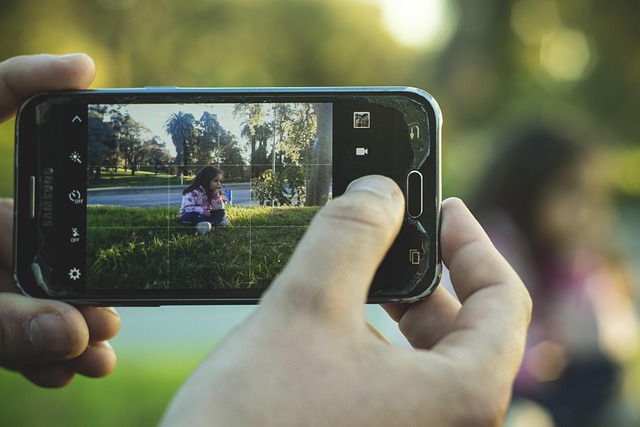
It’s not just private individuals who share their memories with families and friends. There is now a large market for influencers, in which mothers and parents are involved. The children are shown for their social media appearance, products are advertised, and the apparently perfect family life is shown, at times intensively and in minute detail. The children grow up before the eyes of strangers, and have to come to terms with the consequences. Factors such as being in the spotlight at all times, having to pretend and not having any privacy can have a negative impact on the psyche of children and young people. Often, the children themselves become influencers and are exposed to even greater dangers and risks as a result.
WHAT DANGERS ARE CAUSED IN THE PROCESS?
Social media offer paedophiles sufficient information to enable, or even make easier, their crimes. They could use them to find out the locations of children, or places they regularly visit. Criminals can easily find out where a child’s kindergarten, school or even their home is located. Often all it takes is a clue in the background; on a package or sign, for example.
PAEDOPHILES:
Persons who practice various kinds of sexual violence against children. These include sexual abuse, stalking, child trafficking, prostitution and the production or consumption of media depicting sexual violence against children.
HOW CAN YOU PROTECT YOUR CHILDREN?
The best way you can protect your children is by not posting pictures of them in the first place.
1. If zou still want to do so, however, then you should be very careful to avoid showing the childs face. You can also pixellate the childs face or place a smiley over it with the help of an app like Picsart, for example. Be aware, however, that in the age of AI, such measures can be removed again relatively easily.
2. Instagram enables the following profile settings: You can set your profile to “Private”; in this way, only the people who follow the profile and have been accepted can see the posts. For Instagram stories, you can set the profile to “Close friends”. Now, only the selected profiles will see the posts. If possible, only accept the profiles you know, and keep an eye on their posts. What photos has the person uploaded? Do these look real, or are they AI-generated? How many followers do they have? On Facebook, too, there are options for controlling access to your posts.
3. Try to give away as little information as possible. Neither the name nor the date of birth of your children should ever be on social media. Use nicknames, for example.
Always keep an eye out for signs, buildings, people and similar in the background that could give away the location. If possible, dont give away too much about your childs preferences, as this, too, can help perpetrators commit their crimes.
3. You should also make it absolutely clear to relatives and friends of the risks involved and how thez can protect your childrens privacy.
WHAT SORT OF PHOTOS SHOULD YOU IDEALLY NOT POST?
Although many snapshots seem harmless, they too can be viewed by criminals in a sexual sense.
- Photos of your children in the bath, at the swimming pool, in their swimming costume, or naked shots…
- Photos of your children with smeared faces, on the potty, asleep in a crórner, with ice cream on a stick, or with a lollipop…
Note: Many users dont know that when you post, the content rights are transferred to the plstform operators. These operators can then use the poxted content free of charge and forward it to third parties.
THE RIGHT TO PRIVACY AND ANONYMITY
“Like all other people, children in Austria possess personal rights such as the right to ones own image, the right to privacy and the right to anonymity. Should these rights be affected by the publication of photos, it shall require the consent of the child, as long as as it has the cognitive and judgmental ability necessary to estimate the consequences of publication. This ability is usually given from the age of 14 onwards.”
(Source: https://www.onlinesicherheit.gv.at/Services/News/Kinderfotos-in-Social-Media.html )
In conclusion, then, we can see that you can continue to upload your memories onto social media. But you should always be cautious, and check the photos carefully in advance, as well as adjustigng your privacy settings. Ask your children whether they consent to your publishing the images. Be aware of the possible (negative) reactions to your posts. Analogue photo albums and digital picture frames also offer good alternatives.
Sources:
https://www.onlinesicherheit.gv.at/Services/News/Kinderfotos-in-Social-Media.html
https://unicef.at/news/kinderfotos-im-netz-sharenting/
Translated by Tim Lywood
#KinderinSocialMedia #Influencer-Mamas #SicherheitimWeb #Kinderschützen #OpferschutzMenschenhandel #PräventionMenschenhandel #AgainstHumanTrafficking #GegenMenschenhandel #EndExploitation #EndTrafficking #HopeForTheFuture #Österreich