
Fighting human trafficking and the associated illegal trade in prostitution is one of the most complex and demanding tasks of the police in Austria today. Despite legal and strategic measures, the Executive is confronted by numerous structural, operative and legal challenges which make effective education and prevention more difficult. At the same time, bieten sich konkrete Ansatzpunkte zur Verbesserung der polizeilichen Arbeit – at the national and international level.
Human trafficking: a grave violation of human rights
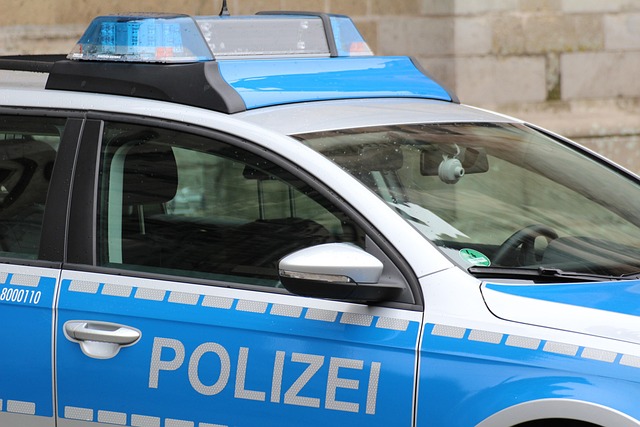
The advertising of, transportation and exploitation of humans for the purpose of a wide range of forms of forced labour and sexual exploitation is clearly defined in the Austrian Basic Law (§ 104a, Basic Law and § 217 of the Basic Law for cross-border trafficking of prostitution). The Austrian Federal Bureau of Investigation (BKA) points out that Austria functions both as a transit and target state due to its location. The offences involved are frequently “control-related offences”, which are only recognised by police measures, massively increasing the numbers of undiscovered cases. Those affected are often working illegally in prostitution, begging or labour, tend to shun the attention of the authorities, and are difficult to identify.
The dividing line between voluntary and forced prostitution: a particular problem
Although prostitution is legal in Austria, the industry only functions subject to strict preconditions and regular controls. Routine police controls show just how difficult it is to clearly identify victims of human trafficking. Economic pressure, linguistic barriers and the awareness that those affected often originate from precarious conditions make estimates on the ground difficult. It is rare for those affected to place advertisements in the press, as many fear the consequences of doing so.
Despite these structural difficulties, the police has been successful in carrying out major operations in collaboration with international partners, including the “Global Chain” operation in 2024. During this operation, hundreds of suspects were investigated and thousands of potential victims identified. Numerous police forces participated in the campaign in Austria alone; the Interior Minister and those responsible for the police emphasise that international cooperation is indispensable if organised groups of perpetrators are to be countered effectively.
Another critical point targets not just the police but the system of criminal prosecution more widely.
Human traffickers have been treated too mildly and the judicial system occasionally issues judgements which fail to match the seriousness of the offences, say critics from victim protection organisations. The Austrian judicial system boasts a wide range of sentences – up to ten years in prison for serious cases – but in practice these are not always fully used.
If the high numbers of undiscovered cases and difficult investigative work is to be countered more effectively, however, then more than just repressive policing is required. Stronger sensitisation to the situation amongst the authorities and public at large, improved use of modern investigative technologies, and deeper collaboration with NGOs and international partners can all contribute to recognising those impacted at an earlier stage, and to expanding protective measures. As well as this, specialised training programmes have been put in place so that police officers can identify and deal with traumatised victims, improving the quality of investigations. Organisations such as Hope for the Future strive to achieve exactly the above-mentioned targets.
Conclusion
The struggle against human trafficking and the associated forms of exploitation is not a task for the police alone, and requires a generalised state approach instead. Effective prevention, consistent criminal prosecution and comprehensive victim protection must be used hand-in-hand if perpetrators are to be called to account. Only in this way can Austria counter the extent of these grave human rights violations.
Translated by Tim Lywood
#MenschenhandelÖsterreich #ProstitutionÖsterreich #Polizeiarbeit #Bundeskriminalamt #organisierteKriminalität #Menschenrechtsverletzung #internationaleKooperation #OpferschutzMenschenhandel #PräventionMenschenhandel #AgainstHumanTrafficking #GegenMenschenhandel #EndExploitation #EndTrafficking #HopeForTheFuture #Österreich