
When we think of money laundering, many still picture the cliché image of gang bosses like Al Capone. Today’s reality, however, is far more sophisticated and deeply embedded in the structure of the legitimate economy. Illegally acquired assets – so-called “dirty money” – pose a major risk to offenders because they can often be traced back to the original crimes. This is precisely where money laundering begins: it allows criminals to shield unlawfully obtained funds from law enforcement authorities. In the end, the offender aims to possess seemingly legal and plausibly explained assets that no longer reveal any connection to their criminal origin.

The “Washing Process”: The Three Phases of Money Laundering
Money laundering is not a single act but a complex process typically divided into three clearly defined stages: placement, layering, and integration.
Phase 1: Placement

This is the riskiest step, in which illicit funds are introduced into the legal economy cycle for the first time.
How Traffickers Begin: Human traffickers are often paid in cash, high-value goods, or cryptocurrencies. When profits exist in cash form, they cannot simply deposit the money into a bank account, as the risk of detection would be too high.
- Purchasing High-Value Goods: A common method is to invest cash in portable stores of value such as gold, watches, jewelry, or motor vehicles. These assets serve as a bridge: instead of holding cash, the criminal now possesses items that can later be declared as “legal” merchandise.
- Exploiting Legal Gaps: Because, for example, Germany long had no general cash-payment ceiling for purchases (unlike many other EU states), the country was historically considered an attractive place to introduce large sums of cash into circulation through car purchases or real-estate transactions.
- Corporate Fronts: Another technique is the so-called “feeding” of cash-intensive businesses. Here, illegal cash is recorded as seemingly ordinary revenue in businesses such as restaurants, gaming halls, or betting shops. After taxes are paid, criminals can then use the remaining profits as legal income.
Phase 2: Layering
The central aim of this complex phase is to separate illicit funds from their source, sever links to the original offense, and obscure the paper trail.
- Complex Transactions: Funds are moved through numerous transactions, accounts, countries, and intermediary persons or shell companies. Criminal networks use cross-border transfers to remain undetected while exploiting loopholes in the legal systems of different jurisdictions.
- Resale of Goods: High-value assets purchased in Phase One (such as cars) are resold, often outside Europe or exchanged for other goods. The proceeds then appear as seemingly legitimate sales revenue. When these steps are repeated multiple times across borders, it becomes increasingly difficult for authorities to connect the assets to the original crime.
- Digital Channels: In more recent cases, especially involving forced labor in so-called scam centers, victims are compelled to conduct online fraud. Funds stolen from victims are routed into cryptocurrencies or disguised investment platforms. Offenders can then convert these crypto assets into seemingly clean funds through exchanges or mixing services. Financial intermediaries, often called “money mules,” are also used to receive and forward funds through their personal accounts.
Phase 3: Integration
In the third and final phase, the money flows back to the offender from a seemingly lawful source.
- Legitimate Reinvestment: Much of the laundered wealth returns to the accounts of traffickers or associated businesses and shell corporations. The objective is to give the money the appearance of lawful origin without attracting attention.
- Economic Infiltration: These now seemingly legitimate assets are reinvested to expand the criminal business model. This may involve acquiring company shares, luxury goods, or real estate. In this way, criminals infiltrate and destabilize the lawful economy and society. Businesses in financial distress – such as during the COVID-19 pandemic – that are hastily sold to outside but solvent buyers can become easy vehicles for further laundering.
The Fight Against the Laundering Machine
Combating money laundering is a central priority for law enforcement agencies. In Germany, since the 2021 reform of the criminal offense of money laundering (Section 261 of the Criminal Code), the so-called “all-crimes” approach has applied. This means that all criminal offenses may qualify as predicate offenses for money laundering, making prosecutions more readily available than before.
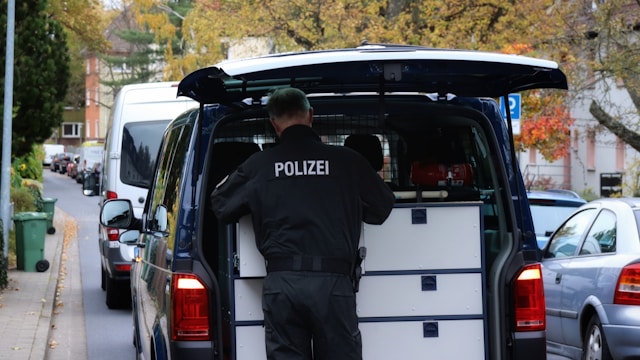
Investigative authorities such as the Federal Criminal Police Office (BKA) combat money laundering through financial investigations. These may be integrated into existing criminal proceedings or conducted independently through the analysis of suspicious financial transactions, even without a specific underlying offense already proven.
To uncover the activities of organized crime groups and traffickers, so-called obligated entities – including dealers, banks, and real-estate brokers – are also required under anti-money-laundering law to detect and report suspicious activity. Yet the Financial Action Task Force already found in 2022 that too few obligated entities in Germany were sufficiently sensitized to these risks, leaving the country vulnerable to money laundering.
Ultimately, the case of human trafficking makes one fact clear: those who exploit victims and earn millions from their suffering must then labor to “clean” those proceeds in order to present them as legitimate. By following the money, we follow the criminals themselves.
Translated by Julia Matzinger
#HumanRightsViolations #Economy #Finance #MoneyLaundering #DirtyMoney #Crime #Crypto #VictimProtection #HumanTraffickingPrevention #AgainstHumanTrafficking #EndExploitation #EndTrafficking #HopeForTheFuture #Austria