
The number of drug victims in Austria who are under-age is rising. Experts are sounding the alarm, and have been demanding for years that more attention be devoted to the issue. Girls from difficult familial or social backgrounds, who are deliberately targeted and influenced by people from the drug milieu, are being impacted particularly harshly. At the same time, Vienna – as the federal capital – is repeatedly described as a hotspot. The number of ambulance callouts involving suspected drug intoxication amongst minors has risen significantly in the city: in 2024 there were 297 callouts registered, a figure which had risen to 372 by 2025 (see source references attached),

On the trail of the facts
The estimated numbers of drug-related deaths and callouts connected with substance abuse are high. Many of the people affected, or those in their environment, do not readily speak about their experiences out of fear of the consequences. To gain a more precise picture of the situation, therefore, the Austrian Health Ministry regularly publishes the “Epidemiological Report on Addiction”.
The report shows a worrying trend: the proportion of those dying as a result of using illegal substances is rising, particularly amongst young women. The figures have been rising continuously since 2019. In 2024, 21 of the deceased women were younger than 25 years old (Epidemiological Report on Addiction 2025, p. 48).
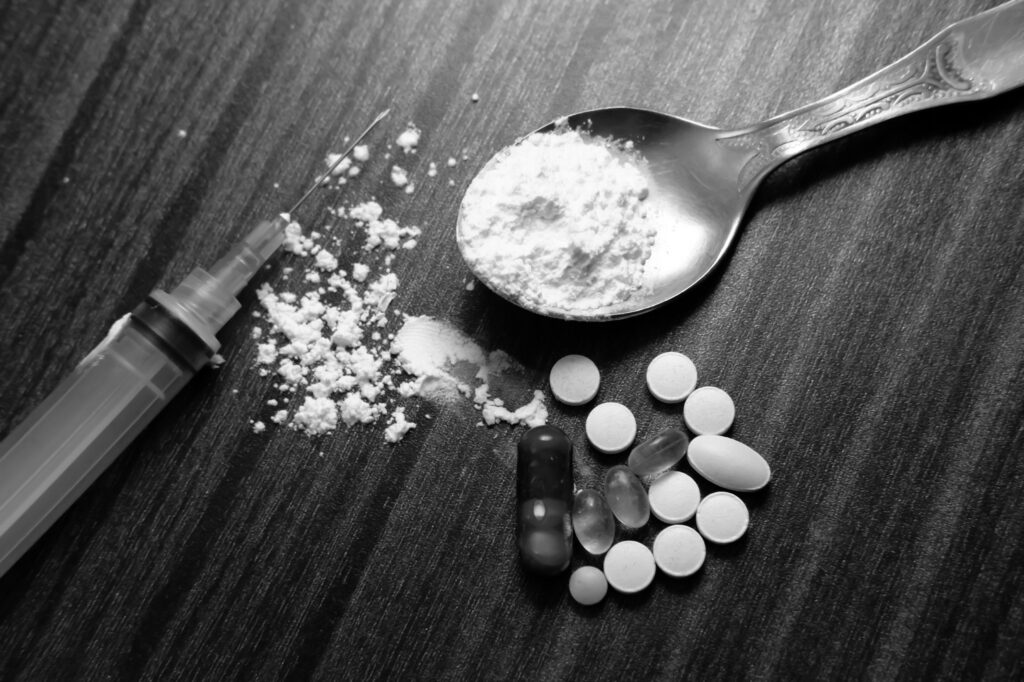
Since 1989, data on drug-related deaths have been surveyed systematically in Austria. The basis for these data is provided by police reports, autopsy results and external examinations of the bodies, which are passed on to the Health Ministry. This data analysis is designed to provide as precise a picture of the drug situation in Austria as possible.
In 2024, 257 people in Austria died of an overdose. That figure corresponds to approximately four deaths per 100,000 citizens of between 15 and 64 years of age. Around 80 percent of these were male. Experts point out, however, that many deaths are caused by so-called “mixed use”. In this case, several substances used simultaneously cause the death, even though the individual amounts of each, taken alone, would not necessarily have been fatal (Epidemiological Report on Addiction 2025, p. 17, p. 44).
A trend that cannot be ignored
The current situation amongst young people is particularly alarming. In Vienna alone, seven young people under 18 years of age died of the consequences of drug use in 2025, despite being in the care of social services at the time.
Child and youth psychiatrist Belinda Plattner reports (as part of an ORF article) on a trend that has experts increasingly worried. Girls of between 14 and 16 years of age are frequently being spoken to at railway stations or in public places, initially lured with attentiveness, affection or drugs, and then taken to Vienna. Once there, the girls are often given substances such as cocaine or crystal meth free. What initially appears to be friendship or support then rapidly evolves into a dangerous dependency.
According to the stories of some of the girls affected, this initial “recruitment stage” is frequently followed by physical manipulation, control, and in many cases also sexual exploitation. Those impacted are drawn into a relationship of dependency which is extremely difficult for them to escape. Precisely these mechanisms are well-known from human trafficking cases, in which perpetrators will create emotional or financial dependencies, isolate their victims and exploit their vulnerability in a targeted way.
The case of a 16-year-old girl found dead in a Vienna hotel room following a presumed overdose is particularly tragic. Investigations are still ongoing. Experts believe it is possible that in this case, drug use and sexual exploitation were closely linked.
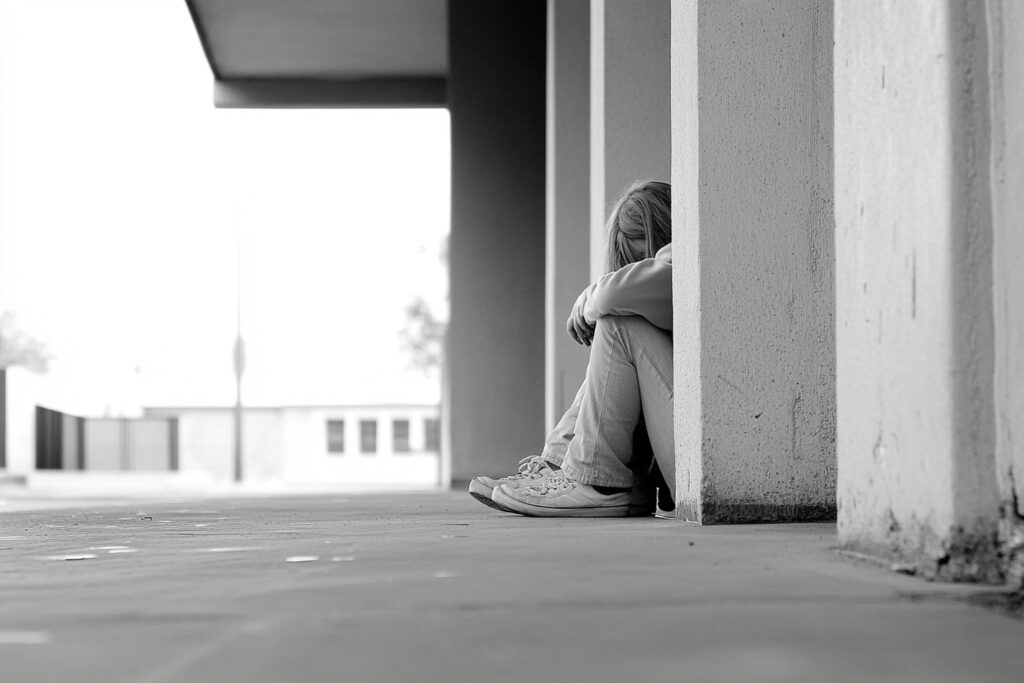
The Viennese Social Services Department for Child and Youth Welfare (Kinder- und Jugendhilfe) emphasises that it “places emphasis on relationship work rather than coercion. At the same time, experts point out that many young people have already suffered deeply traumatic experiences. Developing trust and accepting help is often a long process. Experts are therefore demanding strengthened preventative measures, better protective mechanisms for endangered minors, and a consistent approach to the networks which deliberately drive young people into dependency and exploitation.
When addiction becomes a gateway to exploitation
The cases outlined show just how closely drug dependency, social isolation and exploitation can be linked with one another. It is important that we avoid rushing to conclusions, whilst simultaneously taking existing warning signals seriously. The Epidemiological Report on Addiction 2025 makes clear that young women in particular are increasingly at risk. The number of those who are dependent on hard drugs or who die of the consequences of their use has been rising for years.
This trend should not be understood as an individual failure, however. Rather, it throws up fundamental societal questions. How do we deal with young people who feel excluded? What sort of protective spaces should we be offering girls and young women who are seeking acknowledgement, belonging and security? And how do we prevent exactly these conditions from being exploited by offenders?
Human trafficking rarely begins with violence. Often, it begins with attentiveness, what appears to be real care, or the promise of finally belonging to something. Young people who experience very little support are particularly sensitive to strategies of this kind. The perpetrators know this, and exploit it in a targeted way.
This is why more than just police investigations is required here. Education is required in schools and at properly-financed youth welfare institutions, low-threshold advice, and a society which does not look away when its young people are engulfed in crises. Each and every one of us can make a contribution, by remaining attentive and taking warning signals seriously.
If we notice that a young person is increasingly withdrawing, suddenly hanging out with problematic groups of friends, or is showing signs of dependency and exploitation, we should not simply look away. Acting early can save lives. Because behind every number is a human life, a person whose future is worth protecting.
Info sources:
https://orf.at/stories/3416237
https://www.kleinezeitung.at/artikel/20459092/gefaehrlicher-trend-junge-maedchen-werden-mit-drogen-nach-wien-gelockt
https://www.sozialministerium.gv.at/Themen/Gesundheit/Drogen-und-Sucht/Suchtmittel-NPS-Drogenausgangsstoffe/Berichte-und-Statistiken/Epidemiologieberichte-Sucht-%E2%80%93-illegale-Drogen,-Alkohol-und-Tabak.html
Translated by Tim Lywood
#OpferschutzMenschenhandel #PräventionMenschenhandel #AgainstHumanTrafficking #GegenMenschenhandel #EndExploitation #EndTrafficking #HopeForTheFuture #Österreich