
Social power dynamics are rarely overt. They manifest themselves not only in laws or political decisions, but most of all in everyday life: in glances, expectations and role models. This is precisely where the problem begins. Since what appears to be part of everyday life is rarely questioned. Discrimination against women is not an isolated phenomenon, but is deeply embedded in social structures. Sexism is a form of discrimination that systematically disadvantages women – socially, economically and politically. This inequality did not arise by chance, but has developed over time. A look at its origins reveals the so-called patriarchy – a system in which men structurally hold more power – developed over thousands of years. These power dynamics already emerged in the earliest forms of society, when ownership, control and lineage became increasingly male-dominated. These historical structures continue to have an impact to this day.
Male privilege: the invisible advantages
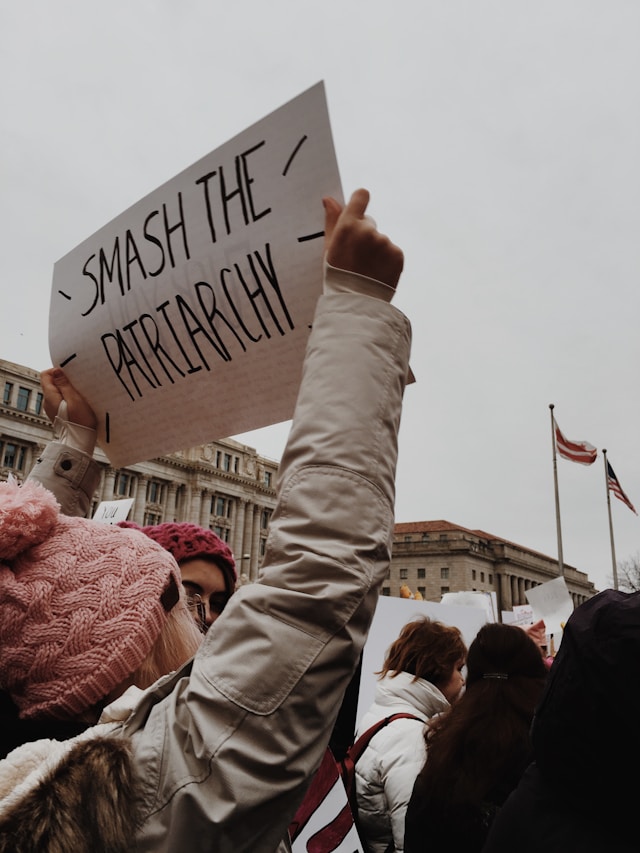
Whilst women struggle with structural barriers, men often benefit from invisible advantages. These are evident in many areas. Men are less frequently sexualised, feel safer in public spaces, and their competence is less often questioned. Women are systematically disadvantaged worldwide. The situation is also clear in Austria. According to the Austrian Chamber of Labour, women earn less, do more unpaid work and are more frequently affected by poverty. This systematic discrimination is a central component of societal power structures.
The invisible burden: care work
One particularly underestimated area is so-called care work: nursing, childcare and housework. This is predominantly carried out by women and is often unpaid. As reports show, this unequal distribution leads to massive economic disadvantages: lower incomes, fewer career opportunities and higher levels of poverty in old age. This economic dependence is crucial, as it creates the conditions under which exploitation becomes possible in the first place.
From everyday sexism to structural exploitation
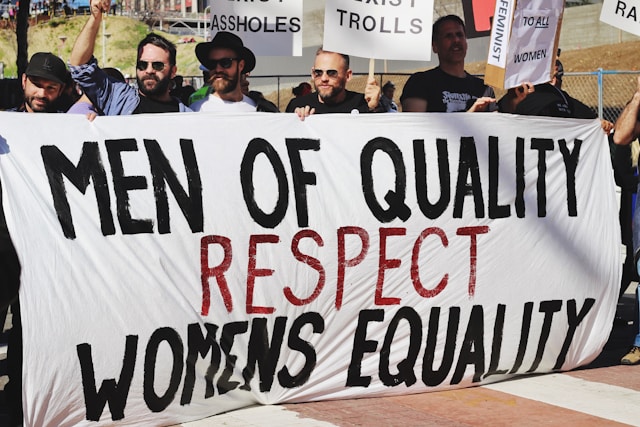
The link between everyday phenomena such as catcalling and serious exploitation is closer than many realise. The mechanism operates insidiously. Inequality is normalised, power dynamics become entrenched, structural disadvantage arises and, ultimately, women’s vulnerability increases.
Worldwide women are systematically disadvantaged in almost all areas of life. This inequality provides fertile ground for violence and exploitation. Sexism is not an isolated incident, but a system. Sexism manifests itself not only in extreme forms such as violence or human trafficking, but begins on a small scale: in jokes, gender roles and expectations of ‘typically female’ behaviour.
Catcalling: When harassment becomes the norm
A particularly visible manifestation of these power dynamics is what is known as catcalling. This refers to sexual harassment in public spaces, such as through lewd comments, whistling or unwanted shouts.
What is often dismissed as ‘harmless’ is, in reality, an instrument of power. For those affected, however, catcalling means one thing above all else: restriction. Many women alter their behaviour; they choose different routes, wear different clothes or avoid certain places. Public spaces, which should in fact belong to everyone, thus become places of insecurity. Catcalling is therefore not simply a matter of individual misconduct, but an expression of a system in which women’s bodies may be publicly judged and controlled.
Conclusion
A key problem is the invisibility of power. Many privileges go unrecognised, both by those who benefit from them and by those who suffer as a result. Added to this are social normalisation, a lack of political prioritisation and economic interests that reinforce existing inequalities. This includes making power dynamics visible, economic equality, safety in public spaces and the involvement of men. Men, too, play a key role in changing these structures. After all, gender inequality is not a ‘women’s issue’, but a societal problem. This means that male privileges, too, must be recognised and reflected upon – not out of a sense of guilt, but out of a sense of responsibility.
Translated by Anna Hoschka
gesellschaftliche #Machtverhältnisse #Männerprivilegien #Sexismus #Catcalling #AusbeutungvonFrauen #Patriarchat #GenderUngleichheit #DiskriminierungvonFrauen #CareArbeit #strukturelleGewalt #Feminismus #Gleichberechtigung #SexuelleBelästigung #FrauenrechteÖsterreich #OpferschutzMenschenhandel #PräventionMenschenhandel #AgainstHumanTrafficking #GegenMenschenhandel #EndExploitation #EndTrafficking #HopeForTheFuture #Österreich