
For us in Austria, the war in Ukraine began with special ZIB broadcasts on the television. For millions of people in Ukraine, it began with a bag in hand, a hasty farewell and the hope of finding safety somewhere. Train stations became places to sleep, sports halls turned into makeshift shelters, and strangers’ cars became lifeboats on wheels. But where protection is lacking and time is of the essence, a dangerous grey area emerges. One that is not only entered by those offering help. Amidst offers of help and lifts, a dark side to solidarity emerged from the very beginning: people exploiting emergencies, making false promises and driving Ukrainians into dependency. The link between flight and human trafficking is not a new phenomenon, but the war in Ukraine shows how quickly modern societies can slip back into old patterns.
Why fleeing during war makes people particularly vulnerable
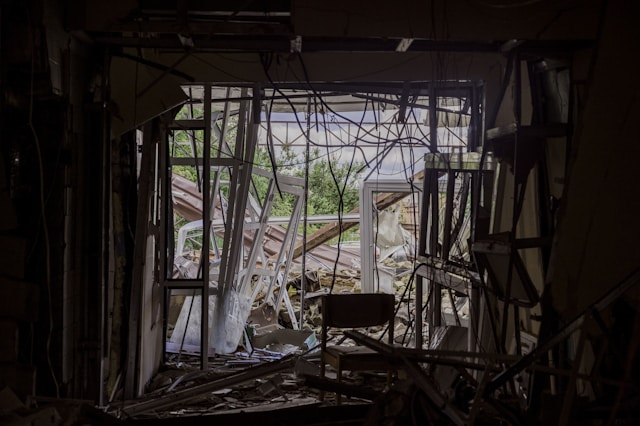
When the first refugees from Ukraine arrived in the EU, Europe’s response seemed clear: open borders, swift residence rights, widespread willingness to help. Behind this display of solidarity lies an uncomfortable reality. For the war in Ukraine has not only destroyed cities, but also dismantled safe havens. Within a very short time, millions of people were forced to make decisions that, under normal circumstances, would take weeks or months: Where should I go? Who can I trust? What must I leave behind?
Fleeing always means dependence on information, on transport, on accommodation, on work. In the context of a war, this dependence intensifies dramatically. People who have lost everything are forced to place their trust in others, often in strangers. At train stations, border crossings and in makeshift shelters, a state of emergency then arises which, whilst characterised by unprecedented solidarity, is also marked by dangerous gaps. For where state structures are overwhelmed and private aid is organised spontaneously, spaces emerge in which exploitation thrives. This is precisely where human trafficking comes in. It exploits insecurity, time pressure and hope, disguising itself as support. The war in Ukraine is a prime example of how quickly protection can turn into danger when humanitarian systems are forced to improvise.
Who is particularly at risk
Since the start of the war, an estimated 32 million people in Ukraine have been directly or indirectly affected by its consequences. More than half the population has lost their income, millions have had to leave their homes, over six million have sought temporary refuge abroad, and millions more have become internally displaced. These figures describe not only a humanitarian crisis, but also massive social destabilisation. When incomes dry up, savings are depleted and there are no prospects for the future, dependencies arise that facilitate human trafficking. In this context, exploitation is not an isolated incident, but a structural risk that persists along refugee routes, through reception systems and within labour markets. It often goes unnoticed because it is disguised as seemingly voluntary arrangements.
As early as 2022, the United Nations sounded the alarm: the war in Ukraine was creating ideal conditions for human trafficking and sexual exploitation. Around nine out of ten refugees are women or children. A demographic composition that the UN considers a high-risk scenario. This is because not all refugees are equally protected. Particularly at risk are unaccompanied children and those separated from their parents, children travelling with adults whose relationship cannot be verified, and people who have already been displaced multiple times within Ukraine.
Added to this are groups that are often marginalised within protection systems: non-Ukrainian refugees, people without papers or without entitlement to temporary protection, stateless persons, Roma, LGBTQI+ people, older people, and people with mental or physical disabilities. For many of them, existing protection mechanisms are of limited use or do not apply at all. A lack of information, language barriers, bureaucratic hurdles and discrimination ensure that they do not receive the help they need. And those who, as a result, have no access to legal work, cannot find accommodation or cannot claim support inevitably fall into situations of dependency and are thus exploited by those who seek to take advantage of them.
Why information can save lives
The war continues, but the focus has shifted. Whilst new crises dominate the headlines, hundreds of thousands of Ukrainian refugees continue to live in difficult circumstances. It is precisely this phase, following the media’s waning interest, that is particularly dangerous. Experience from previous refugee movements shows that human trafficking rarely surges in the first few weeks, but rather when savings are exhausted, state aid is phased out and hope turns to exhaustion. The rise in sexualised search queries, reports of “accommodation in exchange for sex” and the presence of Ukrainian women in European brothels are not marginal phenomena, but symptoms of a system that fails to prioritise protection. Anyone who wants to combat human trafficking seriously must not look away as soon as the cameras move on.
Education is a powerful protective measure in this regard. For people fleeing their homes, information can mean the difference between safety and exploitation. Knowing what rights you have, which offers are legitimate, and where help is available can make a vital difference. Organisations such as LEFÖ demonstrate how effective low-threshold prevention work can be: warnings about dubious housing offers, clear messages such as “Never hand over your passport”, or practical advice on safe onward travel. The rule of thumb is: sometimes a word of advice is worth more than any help provided afterwards. And we at Hope For The Future are also actively involved in helping people from Ukraine to settle in Austria.
Translated by Anna Smith
#Ukrainekrieg #Flucht #Menschenhandel #Ukraine #Ausbeutung #OpferschutzMenschenhandel #PräventionMenschenhandel #AgainstHumanTrafficking #GegenMenschenhandel #EndExploitation #EndTrafficking #HopeForTheFuture #Österreich