
If you travel to Ghana, there are few places where history can be experienced at first hand in such a way as Cape Coast Castle. Now a UNESCO World Cultural Heritage Site, the former slave fort serves not just as an entertainment programme, but also as a place to learn about and understand the terrible atrocities committed by European nations. At the centre of the experience stands a non-descript gate, which for millions of enslaved Africans marked the irreversible farewell to their homeland. This is the infamous “Door of No Return”.
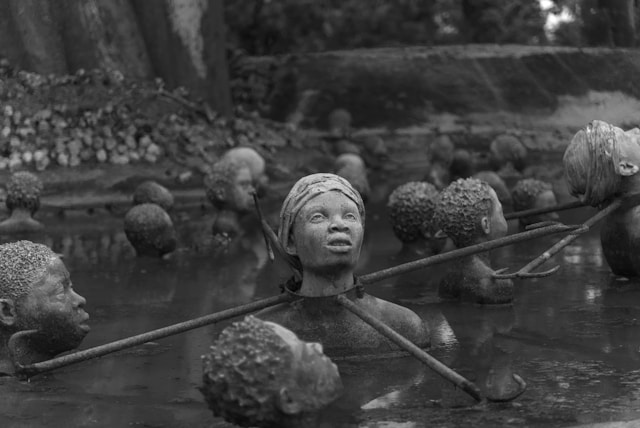
The cold economy of the colonial powers
The history of Cape Coast Castle is closely linked with the greed and expansion of European colonial powers. Although Ghana was a British colony until 1957, the Portuguese were actually the first Europeans to land there, as long ago as 1555, followed by Swedes, Danes and the Dutch. Eventually, however, it was the British who took over long-term control.
Originally, Cape Coast Castle served the trades in gold, wood and textiles. In the face of the vast new demand for workers on sugar and tobacco plantations in America, however, its focus rapidly changed as the occupying forces realised that trading in people was far more lucrative. The British adapted Cape Coast Castle accordingly, extending it with huge new dungeons, and initiating a whole new dimension to their economies. The slave trade had arrived.
In the eighteenth century, the business of the castle was undoubtedly dominated by the transportation of slaves to North and South America. Estimates suggest two to four million people were transported by ship to the Americas as goods through Cape Coast Castle alone.
Crimes against humanity in the dungeons

The atrocities of the colonial powers were manifest in the unimaginably awful living conditions inside the fort, which represented a crime against humanity. Enslaved people were not considered human beings, but as objects and goods to be sent on to the American continents.
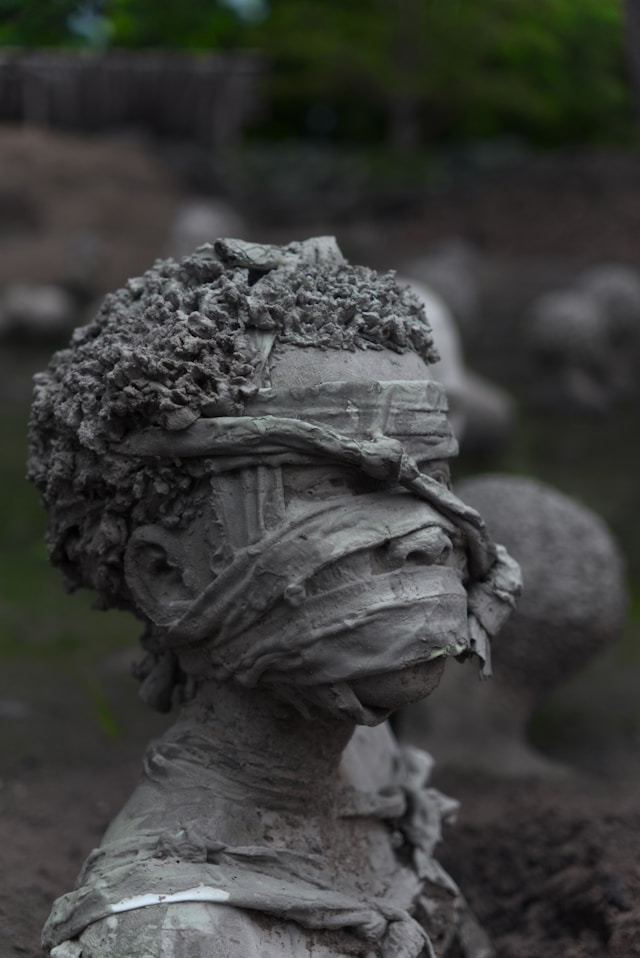
The prisoners were “stored” in large dungeons. These dungeons were often occupied by up to 200 people at a time, who had to spend anything from two weeks to three months there. Visiting the dungeons makes the unimaginable horrors more tangible, as the unbearable heat and lack of daylight remain palpable to this day. Many slaves went blind due to the scarcity of sunlight, which only entered through tiny openings.
Sanitary conditions were appalling. Because there was no means for prisoners to use the toilet outdoors, they were forced to wait for rain to seep through the gutter running through the middle of the dungeon to clean themselves. As a result of these terrible conditions, countless enslaved Africans died before they could even be loaded onto the ships.
Anyone disobeying the British colonial power or fighting for their freedom was brutally punished. Insurgents were sent to totally dark, unventilated cells where, deprived of food or water, they quickly died. By contrast, the British staff led a comfortable life in the upper floors of the castle, in luxurious spaces such as the Governor’s bedroom, despite their knowledge of the inhumane conditions directly below them.
The road into uncertainty: the “Door of No Return”
At the end of this ordeal in the castle stood the “Door of No Return”. This large gate led directly to the harbour. It was at this moment that slaves who were forced through this gate – often in handcuffs and chained together by the neck – would see their homeland for the last time.
From there, there truly was no return. Those who survived were loaded onto ships. The journey across the Atlantic, the feared “Middle Passage”, robbed the enslaved people of their past, family and even their names. The ships, too, were subject to horrific conditions, ensuring that far from all the slaves arrived in the Americas alive.
The legacy and the present
Today, Cape Coast Castle offers a painful insight into the history of West Africa and the atrocities committed by European nations. For many, especially African-Americans seeking the places where their predecessors saw their homeland for the last time, the visit is an extremely emotional experience. Spiritual acts are far from a rarity at the site.
The commemorative culture of the African diaspora has had the effect of a symbolic change, however: several decades ago, as part of an initiative, two bodies were borne out of the sea, through the door and back into the castle. In this way, the “Door of No Return” was symbolically transformed into a “Door of Return”. Ghana is hoping to encourage the descendants of enslaved Africans to view Africa as their homeland, and to visit the site.
Translated by Tim Lywood
#Menschenrechtsverletzungen #Verschleppung #Sklavenhandel #Ghana #Ökonomie #Kolonialmächte #Amerikas #DoorOfNoReturn #UNESCO #Tourismus #OpferschutzMenschenhandel #PräventionMenschenhandel #AgainstHumanTrafficking #GegenMenschenhandel #EndExploitation #EndTrafficking #HopeForTheFuture #Österreich