
When Julia was helping her mother sort through the post, she noticed an unusual bank statement for the first time. ‘It’s probably just a mistake,’ her mother said quietly, almost apologetically. But a few weeks later, the strange debits began to pile up. What was initially a slight doubt developed into a shocking realisation: something was wrong. A single signature, a hastily granted power of attorney, and all the money was gone.
Unfortunately, such stories are not isolated cases. Financial exploitation is one of the most common forms of violence against older people. Those in need of care are particularly at risk. The consequences are serious: in addition to considerable financial losses, the health, well-being and quality of life of those affected often suffer.
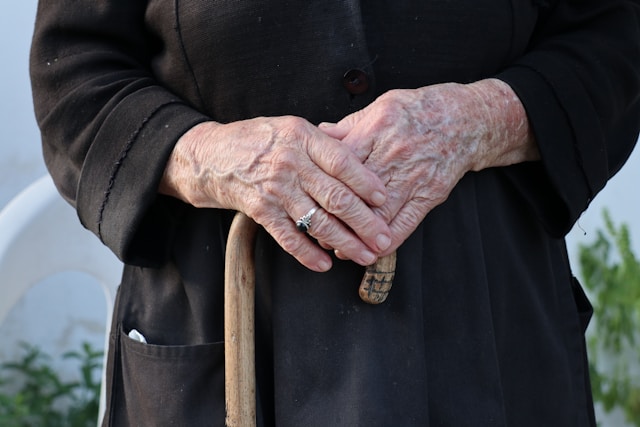
But what exactly is meant by ‘financial exploitation’?
Violence can take many forms. Financial exploitation is one of them and particularly affects older people in need of care. A distinction is usually made between two main forms:
- financial elder abuse
- fraud and online scams
In both cases, perpetrators deliberately exploit the health and social vulnerability of older people.
Financial abuse is characterised above all by the exploitation of an existing personal relationship or relationship of trust. Typical examples include: theft or embezzlement of money or valuables, pressure or coercion to make gifts or changes to a will, abuse of power of attorney or financial guardianship, for example to secure a possible inheritance. Such cases often occur within families, circles of friends or acquaintances. Important: Financial abuse is not always intentional; well-meaning actions that harm the elderly person are also included.
Fraud and trick theft, on the other hand, are often committed by criminal groups, some of which are internationally networked. This involves falsely presenting facts – such as an emergency, an alleged friendship, a romantic relationship, a cash prize or a lucrative investment – in order to obtain money, personal data or access to homes. Typical examples are the classic ‘grandchild scam’, fake police calls, shock calls or fraudulent emails (phishing). In most cases, there is no personal relationship between the perpetrators and the victims. The only contact is usually via telephone or the internet.
There is no legal distinction between the two forms: even relatives can act fraudulently. In addition, there is a grey area of unfavourable contracts or aggressive sales practices which, although rarely punishable by law, can nevertheless cause considerable harm to older people.
What are the risk factors?
Although anyone can become a victim of financial exploitation, people who need care and support, such as those with chronic illnesses, disabilities or impairments, are particularly at risk, as already mentioned. The MSD Manuals list several risk factors in this context.
Risk factors for older people:
Abuse is accordingly more likely to occur when older people experience certain stresses or limitations, for example:
- Physical frailty, often caused by chronic illnesses
- Difficulties in performing everyday tasks independently
- Communication problems
- Social isolation
- Cognitive impairments, such as dementia, confusion or other mental limitations
Risk factors for perpetrators:
Abuse is also more common when perpetrators have certain characteristics or stresses, such as:
- Financial dependence on or cohabitation with the older person
- Alcohol or drug abuse
- Mental illness, such as schizophrenia
- Known propensity for violence
- A history of conflict or violence, such as previous experiences of domestic violence
- High levels of stress, for example due to financial problems or family losses
- A lack of skills or resources, which makes care and support difficult and frustrating
- His or her own health or cognitive disorders, such as dementia, which can lead to aggressive or restless behaviour, even if the person was previously calm
How can you protect yourself and your loved ones?
Financial exploitation cannot always be completely prevented, but there are measures that can significantly reduce the risk:

#1 Education & Early Detection
Awareness is the most important step in prevention. Older people, family carers and professionals in care facilities and advice centres should be informed about the forms, warning signs and consequences of financial exploitation and know how to respond appropriately in risky situations. This includes knowledge about powers of attorney and bank authorisations and ways to prevent their misuse. Digital skills also help to detect online fraud at an early stage.
#2 Empathy & Social Support
An empathetic environment creates security and strengthens the confidence of those affected. Empathy reduces isolation and thus indirectly protects against financial exploitation. Patience, understanding and respectful communication promote self-determination and help to reduce vulnerability to abuse.
#3 Specific points of contact
There are specialised agencies that assist older people, family carers and those affected by suspected financial exploitation or other forms of violence:
Pro Senectute helpline: +43 699 11 20 00 99
Free of charge and confidential. Specialising in various forms of violence in old age. Whether you have experienced violence yourself, are unsure how to assess a situation or want to discuss your observations, you can get advice here and be referred to other services if necessary.
Women’s helpline: 0800 222 555
Available around the clock, free of charge, multilingual and unbureaucratic. Provides information about forms of violence and can initiate police protection measures if necessary.
Men’s emergency hotline: 0800 246 247 & Men’s information: 0800 400 777
Offer men free, confidential telephone, chat and email counselling and refer them to further support services.
Translated by Anna Smith
#FinanzielleAusbeutung #Gewalt #StopptGewalt #Ausbeutung #StopptAusbeutung #GewaltfreiePflege #Menschenhandel #digitaleTools #OpferschutzMenschenhandel #PräventionMenschenhandel #AgainstHumanTrafficking #GegenMenschenhandel #EndExploitation #EndTrafficking #HopeForTheFuture #Österreich